Q&A with Diego Callegario, Transcenda VP of Design
Diego Callegario is a design leader, raised in Rio de Janeiro, Brazil, who recently joined Transcenda as VP of Design. In this conversation he traces the roots of his creative practice, what he believes makes design endure, and how the shift toward AI-native, post-screen interfaces is reshaping the relationship between people and the systems they use.
Can you share your story, and when you realized design was a big part of your life?
From a young age, I was constantly connecting with different kinds of people and cultural expressions. That experience fed my vision and broadened my perception in a deep way. That’s closely connected to design, because at its core, design lives on curiosity, inventiveness, and the richness of your reference universe.
The first references came from inside my home. My mother baking bread, showing how dedication and love in what you do is essential to anything, how to nourish from that place. My father is exploring Brazil, traveling for work, always trying as an entrepreneur to build something new, finding a way, dreaming. His belief that it’s possible to do things differently was always a very powerful element in my imagination. And my two grandfathers, both working in construction, planning, but also getting their hands dirty, laying a house brick by brick. Those were very strong foundations for me, literally and figuratively, as a form of teaching.

I have a very strong family foundation that has always given me structure, and it’s precisely from that structure that I’ve been able to explore everything else. So I’ve always navigated the relationship between strong values that act as a compass and the exploration of the unknown. And in that combination, I find what is truly special and precious in my life.
Alongside that, I always had plenty of room for conversation and debate with my brothers. That enriched me enormously in terms of discussion, the ability to change my mind, and the willingness to keep learning. And finally, I would say my city. Rio de Janeiro is a city of important contrasts, between nature and urban landscape, between wealth and poverty, between joy and work. Those contrasts teach a great deal on their own. So I would say it’s that combination, home and city, that gave me the knowledge I carry with me throughout my entire professional journey.

The combination of that technological robustness and a design practice that thinks in terms of problem-solving, systems thinking, and delivering what truly resonates is a genuinely fantastic combination.”
What was your first impression of Transcenda, and what has surprised you most now that you’ve been here a month?
Without a doubt, the technical capability and the drive to deliver, to solve problems, to find a way, to produce the best work possible. I had certain expectations based on what I already knew about the company, but arriving here, meeting the people, and seeing that determination and will to deliver the highest-quality work, and to do it with an exceptionally high level of technical discussion, was genuinely impressive.
The engineering team is absolutely brilliant. Rarely have I seen this level of talent working so well together. And the design team is remarkable, with a maturity that is hard to find. The combination of that technological robustness and a design practice that thinks in terms of problem-solving, systems thinking, and delivering what truly resonates is a genuinely fantastic combination.
At Transcenda, you design for a world where the screen is no longer the primary interface. How do you make that real and actionable for clients?
We need to understand where the interaction occurs and its specific characteristics. Voice, for example, will increasingly become a central mode of interacting with the environment around us, driven by the evolution of devices, by advances in speech understanding, and by the pace of everyday life. You need genuine command over the type of interaction, its heuristics, and how it unfolds in the relationship between a person and a system. The work starts with understanding what a given interaction type brings to the table:
- what new possibilities it offers
- what constraints it imposes
- what considerations you need to hold
From there, the goal is to identify the optimal communication dynamic between the user and the service, given the specific characteristics of the interaction.
Voice is a strong example, but there are others. We will begin to see interfaces layered on top of one another, projected, transparent, and embedded in the physical world, as in the case of smart glasses. And what matters most is that the system understands where the user is, what they are starting, what the context is, and regardless of which interface is being used, it delivers what is most relevant to that person at that moment.
You can look at this from both outside and inside the digital world, and the principle holds either way. Take a great Brazilian designer like Rogério Duarte, who produced important graphic work in the 1970s. Those expressions are still iconic today; you look at a film poster or an album cover, and it remains completely relevant.”
When you consider something well-designed, and built to endure, what are you evaluating?
In the end, we always come back to form and function. What is the objective? What are we solving? Can the design accomplish that? Can it resolve the problem or question at hand in the best and most efficient way possible? That is a function.
And form is how we do it. Because when we are talking about a digital product or service, interaction is the final layer of the relationship between a person and a system. Mastering how that interaction happens is, in many cases, solving the problem in a different way that creates relevance for the product or service, and ultimately for the business.
To design for both form and function, I believe the primary factor is an ability to reach the essence of what you are trying to create or solve. It’s when you strip away everything that isn’t necessary for the product’s purpose. That is what makes design endure, even as behaviors and markets transform around it.
I don’t believe the focus on form and function changes too much. The tools and the ways people relate to products and services change, but in the end we still need to connect those needs to a solution that makes sense and works.
Quality is the ability to do that with the available resources, and in the most elegant way possible. It means being efficient. It means finding the central point of the experience where you can bring together what the company, product, or service offers and the needs and desires of the person who will use it.
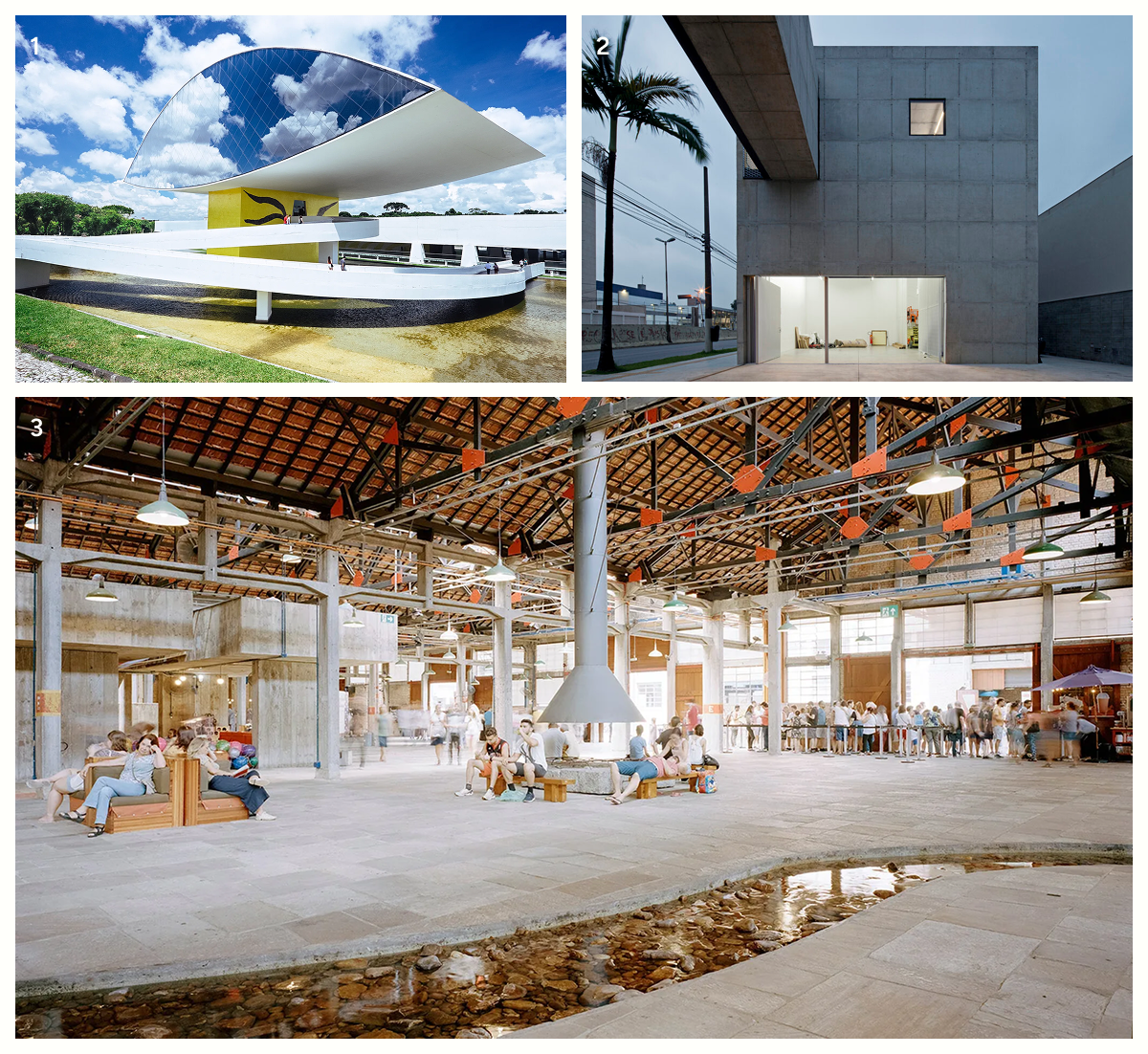
You can look at this from both outside and inside the digital world, and the principle holds either way. Take a great Brazilian designer like Rogério Duarte, who produced important graphic work in the 1970s. Those expressions are still iconic today; you look at a film poster or an album cover, and it remains completely relevant. Or consider architects such as Oscar Niemeyer, Lina Bo Bardi, and Paulo Mendes da Rocha. You walk into a museum or a house they designed, and you feel you are in something timeless. The proposition is so strong that it sustains itself across decades.
The same applies to digital products, even in a more dynamic environment. Take Gmail, a product that knows how to be innovative while sustaining itself through functional design that doesn’t try to reinvent too much, but consistently adds what genuinely makes sense. Or a newer product where design is essentially the function itself, one that brings something new, like a particular way of visualizing a mental map, while remaining direct, elegant, and focused on its purpose. When you understand the essence, the thing endures.
We are talking about a fundamental change in the user’s role, shifting from someone who operates a system to someone who supervises an action.”
How do you design for intent-driven, conversational systems?
We are living through a major revolution in how people interact with systems, and from a user experience perspective, the shift is tremendous. We are not talking about small adjustments. We are talking about a fundamental change in the user’s role, shifting from someone who operates a system to someone who supervises an action. That is why intent becomes so central. You need to understand that intent and orchestrate the system to deliver the best possible response. That changes everything.
First, it changes the form of interaction. You capture intent, and from that intent, the system produces the best possible answer. To do that well, you need to be very precise in how you capture intent, and you need to give users the ability to redirect that understanding, to refine it, with increasing precision over time, even for increasingly complex and long-running tasks.
A second shift is in the interfaces themselves. We will see interfaces that are generated by the models rather than predetermined. Depending on what the user needs, the interface will adapt to deliver the best response, and it may be an interface that was never planned in exactly that form.
For all of this to work, it is crucial to understand how behavior is changing, how these systems function, and to establish the structural foundations that enable the system to behave as well as possible. That means setting clear directions for what the system should do, and defining the structural building blocks of the interface so that responses, whether visual, textual, or auditory, make sense for what was requested, but also align with the brand’s tone, the company’s values, and the product’s particular way of showing up.
One of the real risks here is homogenization, everything starting to feel and sound the same. That cannot happen. Defining how a product responds to input in its own distinct voice and form is not optional. It is crucial.
The first mistake is chasing every trend without thinking….The second is the opposite: staying still and believing nothing will change, when in fact everything already has.”
What are the biggest mistakes design and product leaders make building AI-native practices. How is the design and engineering relationship changing?
The first mistake is chasing every trend without thinking. Seeing or reading about something new and copying it without understanding the motivation, the reasoning, or the context behind it. The second is the opposite: staying still and believing nothing will change, when in fact everything already has.
The first mistake is chasing every trend without thinking. Seeing or reading about something new and copying it without understanding the motivation, the reasoning, or the context behind it. The second is the opposite: staying still and believing nothing will change, when in fact everything already has.
The third is failing to understand how AI functions as a tool alongside human strengths such as creative thinking and judgment. AI can often create value by increasing efficiency, freeing up space for us to think about direction, and make better decisions on top of what the tool is enabling. And what it’s enabling is a new and remarkable universe of possibility.
So the most important thing is not to underestimate the impact of this shift. We are at the beginning of something genuinely revolutionary. And at the same time, you have to understand that it is a tool and, with that, how to use it best. How it changes structure, organization, product process, and user interaction.
One thing does not change: the capacity for thought, judgment, and decision-making grounded in experience, taste, and information that will only become more available over time. That understanding is what will make all the difference between those who fall into a homogenized class of AI users, and those who grasp the true power of these tools while retaining the ability to think, decide, and find competitive advantage through them.
The first thing is to have patience, because in the middle of the process, things can feel less clear. That is part of it. Within the product process, there is now a growing overlap between product, design, engineering, and other functions. Navigating and establishing flow within that overlap takes time.
The second is having clarity about where each discipline adds its greatest value. The tendency is toward builders with different and complementary capabilities. The ability to think creatively and direct AI effectively will become an increasingly important skill across roles.
Design has a critical role in strategy. By its very nature, design sits at the intersection of different parts of a company and a product. The ability to understand a path forward by synthesizing business vision, user understanding, market signals, and technological capability has always belonged to designers. That will not change. Nor will the ability to think through and make decisions about the final interaction layer, which remains design’s domain.
At the same time, engineers and designers working with AI will increasingly speak the same language. The barriers around interface components will be lowered for engineers, and the barriers around code will be lowered for designers. In the short term, that may create some additional friction. But with patience, it will lead to significant convergence. Each discipline has a superpower, and when those superpowers are placed in the right context, the result will be builders who are far more capable and deeply complementary. I look to the future of this relationship with great optimism and genuine confidence in what it will allow us to deliver.
I have a great deal of intensity and energy, and a strong drive toward creativity and finding different kinds of solutions.”
You’ve designed for companies globally. How do culture and geography shape your approach?
With experience, you realize that many things are similar across contexts, while others are specific to a given culture or market. It’s a balance between what is universal and what is particular. Brazil is a fascinating country in this regard. It has a massive market, an extraordinarily diverse population, a highly competitive landscape, and demographic characteristics that will become more common in other parts of the world. This creates an enormous amount of learning, and it forces you to find non-obvious solutions in order to create space, grow a product, find differentiation, and be genuinely competitive on a global scale. A great deal of what I learned here allows me to look at similar problems in other countries with the confidence that I’ve already faced them right here in Brazil.
What surprises your colleagues about how you work, and what excites you most about the next five years?
I believe the main thing is my calmness. I have a great deal of intensity and energy, and a strong drive toward creativity and finding different kinds of solutions. At the same time, I can remain very calm in high-stress situations. That calmness has always allowed me to see things through a wider lens, to read the field, and from that place to make better decisions.
To stay calm in a stressful environment, I need to release that stress somewhere else. That’s why I’m deeply connected to nature, to being present in it, to hiking, sports, and adventure. Those are places where I find balance, alongside other forms of culture, so I can show up with composure in a work context.
I believe we have the opportunity to work within one of the greatest technological revolutions of the last century. That alone is an enormous opportunity. Being inside large companies, understanding how to best use these technologies, how to position around them, and how to use them to deliver better products and services, and through that create real differentiation, that is something I find genuinely exciting.
And alongside that excitement, there is a strong sense of responsibility. Being someone who thinks about and helps decide how large companies will behave and adapt in the years ahead carries real weight. It’s a rare position to be in, and I don’t take it lightly.
WE WOULD LOVE TO HEAR FROM YOU
